
Kollam, Kerala.
Jeedi – Cashew in multiple Sanskrit derived languages.
Needy Jeedi is a campaign that we’ve structured for a Cashew exporting, a third-generation Malayali family business… operating in the cashew processing and export industry for over 40 years, supplying bulk quantities to international buyers across the Middle East and Europe, running a unit with 80+ workers (majorly women workforce, as is typical in Kerala’s cashew sector)
With consistent turnover, zero debt, strong distributor relationships, and absolutely no brand. No website, no Instagram, no packaging identity, no recall beyond a phone number saved by a few exporters.
Kollam has long been known as the cashew capital of the world, but over the last decade Vietnam and African countries have aggressively captured market share due to mechanisation, pricing, and scale, while Kerala units continue operating on labour-intensive, heritage-driven systems. What this means is that your product is still premium, but your margins are shrinking, your dependence on middlemen is increasing. You didn’t lose quality, you lost control of how your value is perceived.
“Our product is enough, marketing is not needed.”
Which sounds right, until you realise nobody outside your existing network even knows you exist.
We are exporters, not a brand – Challenge One. Product mindset
“We are exporters, not a brand” is where most legacy businesses quietly limit themselves. You’ve spent decades perfecting sourcing, processing, quality control, labour systems, and export relationships, but almost no time thinking about what your product actually means. At that point, you’re not a brand, you’re simply a backend supplier inside someone else’s brand story.
What if it doesn’t work! – Challenge Two. Fear of positioning
“Will people buy?”, “What if it doesn’t work?”
Manual processing, Kerala origin, experienced workforce, and consistency are all luxury signals in today’s market, yet you’re selling it like a commodity.
It’s worth trusting.
Should we just retire!? – Challenge Three. Goal Confusion
The constant confusion between volume and brand slows everything down, because volume creates dependence while brand builds control, and trying to do both without clarity leads to neither working properly. You cannot build long-term value while playing only the volume game.
Strategy???
Instead of forcing a “digital transformation”, the focus was on repositioning the business from a cashew exporter in Kerala to a Kerala-origin premium food brand, because nobody wakes up wanting to buy from a factory, but people will always pay for origin, story, and trust when it is presented correctly.
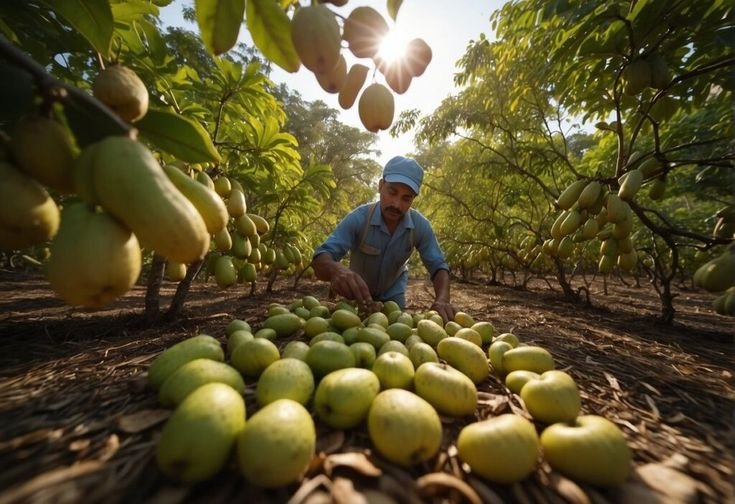
Ok, What’s the job now:
The first step was brand creation, building a name rooted in Kerala identity rather than generic export naming, along with a visual language inspired by tharavadu structures, plantation textures, and muted earthy tones, something that naturally fits into a premium retail environment instead of a wholesale context. Packaging played a major role here, because nobody gifts a 25kg sack of cashews but they will confidently pick up a well-designed ₹1200 box.
Digital presence was intentionally controlled and calm, avoiding trends and unnecessary noise, focusing instead on process visuals, the people behind the product, and the land itself, turning Instagram into visual proof of quality rather than a content machine.
The website followed the same thinking, instead of overwhelming visitors with a catalogue.
For the first time in 40 years…
Customers began reaching out directly instead of through intermediaries, pricing confidence improved as the business stopped undercutting itself, and the brand entered a few premium retail outlets in the initial phase.
For 40 years, you exported your product, but you never exported your identity.
Who are you?
This applies directly to all kinds of exporters Any where in India. Kerala, spice traders in Kochi, rice mill owners across Andhra and Tamil Nadu, traditional family businesses with no digital presence, manufacturers dependent on middlemen, and any legacy business with strong product quality but no brand visibility.
What’s our job here?
We take businesses built on trust and quality that are slowly disappearing due to invisibility, and turn them into brands that people can see, understand, and choose.
Observed Pattern’s data.
This is a strategic case representation built from real industry patterns observed across Kerala’s traditional cashew sector and similar legacy businesses in South India.